Sujith Puthran
Grid Maker Pro is built by a working artist, not a software company. That's not a slogan — it's the reason the tools are shaped the way they are.
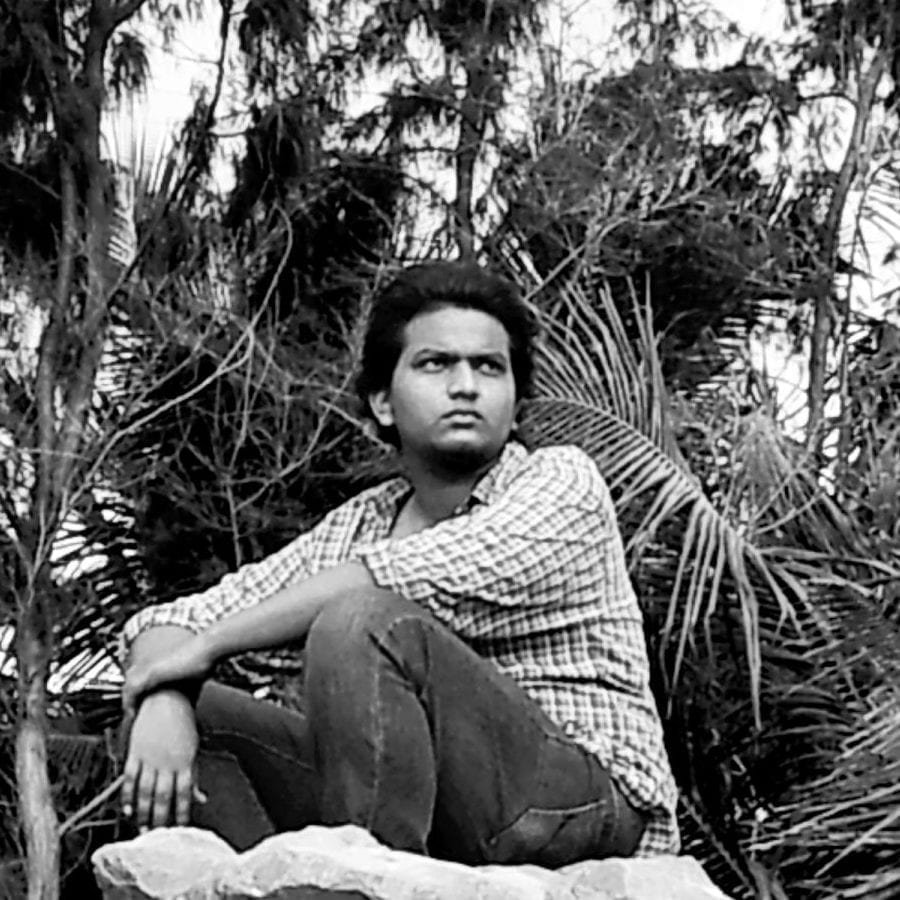
- Mediums Charcoal, watercolour, oil, pastel, coloured pencil and graphite
- Subjects Figurative and portrait work, drawn almost entirely from Indian cultural life
- Working since First gallery group show in 2009; 15+ years at the easel
- Training Entirely self-taught — no art school, no atelier
- From Mulky on the Karnataka coast, born 1990 — now based in Mumbai, India
- Elsewhere sujithputhran.com · @sujithputhranartist
Sujith Puthran has spent more than 15 years as a practising artist. Born in 1990 in Mulky on the Karnataka coast, raised in Moloor and now working from Mumbai, he taught himself to draw and paint without a formal art education — no art school, no atelier — first from observation, then from the classical construction methods this site documents: the grid method, proportion systems, the geometry under a composition. The tools here exist because he needed them first.
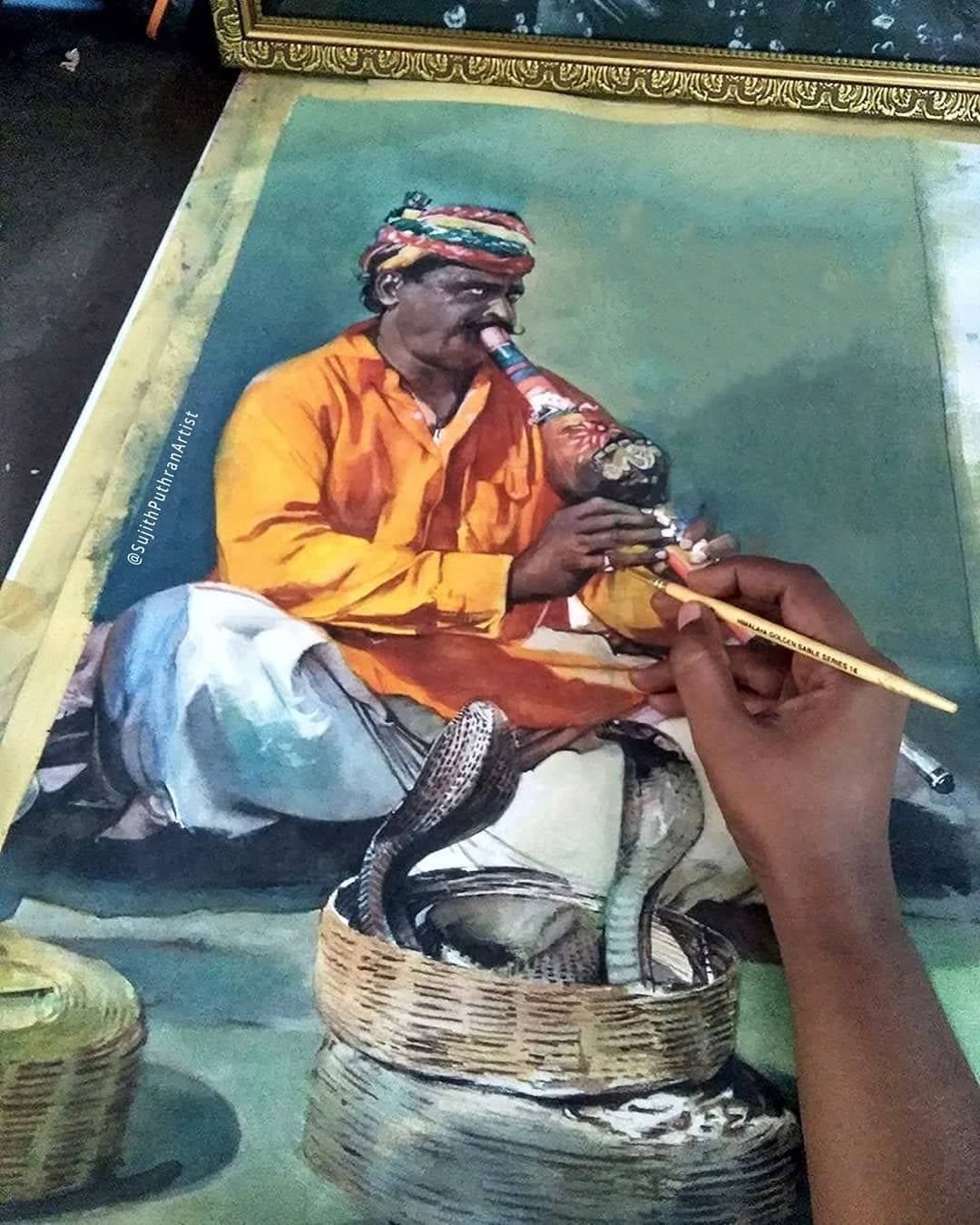
He works across every medium the subject asks for — charcoal, watercolour, oil, pastel, coloured pencil and graphite — and the choice is made by the image rather than by habit. Charcoal where a figure needs weight and velocity, and the black that a stage light carves out of a body. Transparent washes where the light has to travel through the paint and come back off the paper. Oil where depth has to be built slowly. As he puts it on his own site: every medium is a dialogue between control and surrender — water, pigment and charcoal each have their own spirit.
The grids exist because a real artist needed them first — not because a company guessed at what artists want.
The work
The gallery work is organised as six closed collections rather than as single pictures — thirty-six originals in total, each series worked through to its end before the next begins. The subjects are consistent: Bharatanatyam dancers, sadhus, the Varanasi ghats, Rajasthan, the Buddha, and mother and child.
What makes them relevant to a catalogue of composition overlays is that each series is built around a specific structural problem, not a mood. A dancer at rest is still carrying tension, and the drawing has to show where the weight is travelling. Sun-worn skin cannot be drawn line by line. Stone that has absorbed centuries of touch cannot be rendered in flat, fresh colour. Solving those on paper, repeatedly, is what the overlay catalogue was pressure-tested against.
Alongside the collections he has completed more than 200 commissioned portraits, which begin from a brief and a reference stage rather than from a price — the kind of deadline drawing where a reliable grid is not a nicety but the difference between one sitting and three.
The six collections
Each collection is six originals. The note under each one is the problem that series set, in the artist's own framing on his portfolio.
-
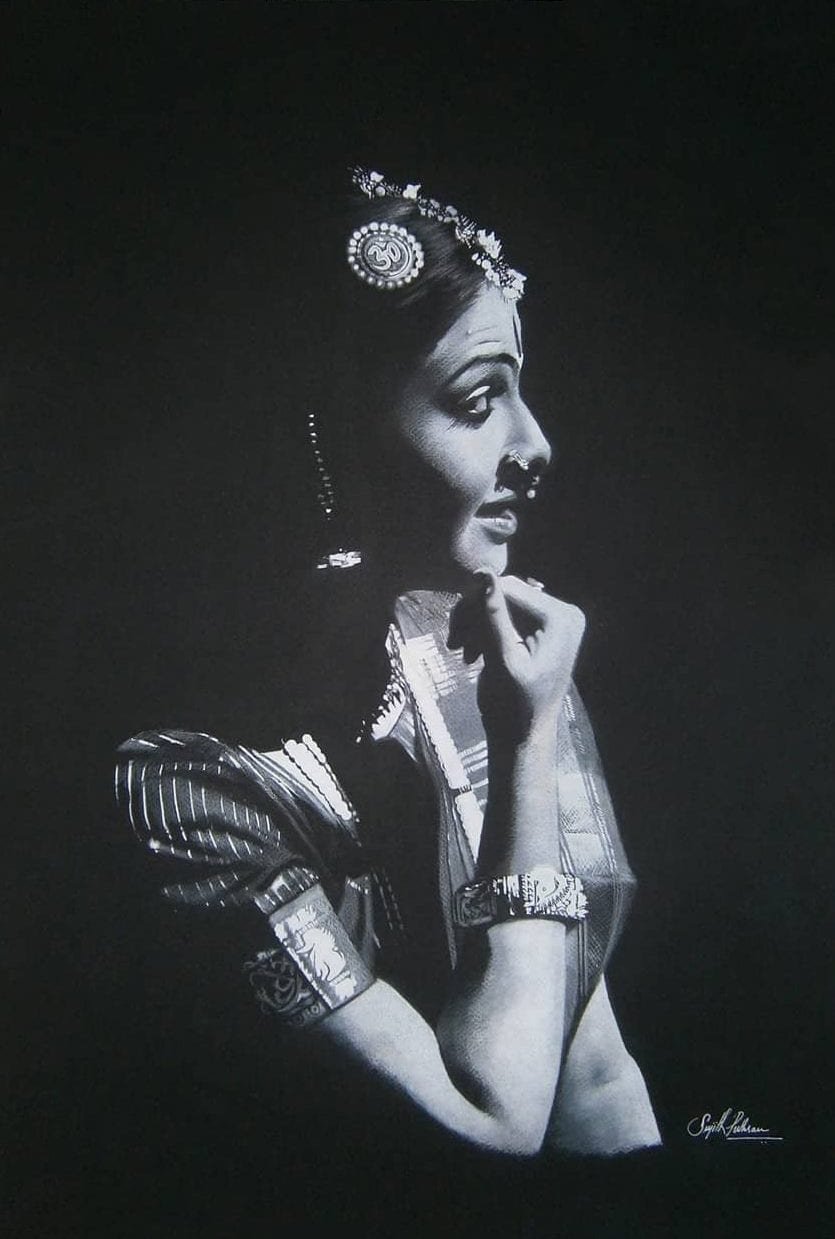
Dancers
Bharatanatyam, the classical dance form of Tamil Nadu. A held pose is not a still one — the drawing has to show where the weight is travelling.
Charcoal -
Sadhus
Sadhus, village elders and performers — faces shaped by devotion, weather and work. Sun-worn skin is built in thin layers that let the paper stand in for decades of weather.
Portraits on paper -
Heritage
The Varanasi ghats and the ordinary rituals along them. Stone that has absorbed centuries of touch is laid in imperfect layers that let earlier passes show through.
Mostly watercolour -
Rajasthan
The Thar and its textiles. Rajasthan reads as a colour system before it reads as a place: warm neutral ground, human life asserted in saturated cloth, and no black anywhere in the shadows.
Mostly watercolour -
The Buddha series
Buddha images, figures in devotion, and still water. The subject carries inherited conventions a painting can interpret but not invent, so each work looks for the quiet inside its own means.
Works on paper -
Mother & child
Tenderness held inside a deliberately narrow tonal range — values close enough to merge, with the only strong contrast saved for where skin touches skin.
Works on paper
Every original is one of a kind and hand-signed, and the work is sold directly from the studio rather than through a gallery. The full catalogue, the studio journal and the commission process live on his own site at sujithputhran.com.
Where the eye was trained
Self-taught does not mean unschooled. In the absence of an atelier the training came from looking hard at people who had already solved the problem — which is the same instinct behind documenting 82 overlays rather than inventing new ones.
- Rembrandt van Rijn
- Chiaroscuro and emotional depth — how light and shadow are used to carry a portrait rather than merely describe it.
- The Ajanta frescoes
- Fluid, expressive linework from the 2nd-century BCE cave murals, and a constant reference for how a figure can be stated in line alone.
- John Singer Sargent
- Confident watercolour handling, and the lesson that suggestion beats meticulous, overworked detail.
- Ragas, Sufi poetry, the monsoon
- Indian classical music for its melodic arcs, Sufi poetry for surrender over control, and the monsoon for the same unpredictable energy watercolour has.
Shown and collected
The career is verifiable, and most of it happened before Grid Maker Pro existed:
- Group exhibitions at Vadehra Art Gallery (2009), Kalaneri Art Gallery, Jaipur (2010), and Chitram Art Gallery, Kochi (2012)
- A solo exhibition in Berlin at Atelier Sabine Neibhur (2013), shown through the TuttoArte platform
- Group showing at the Lugano Innovation Lab, Bolta Palace, Switzerland (2014), as part of YICCA
- Winner of the YICCA International Contest of Contemporary Art — both the open vote and the winter edition — first place in Tallenge International Art Contest No. 46 (2014), and eight awards from The Wall Art Magazine between December 2012 and October 2013
- Work held in private and corporate collections in India and the United States, including GE Capital (California) and Ramada Plaza Palm Grove
- More than 200 commissioned portraits completed for clients internationally
Art is not what I do, it is how I breathe.
Why Grid Maker Pro exists
Grid Maker Pro started the way most useful tools do: from a problem at the easel. He needed accurate proportions on a reference, the existing tools offered two or three basic grids, and so he built the overlay he actually wanted to draw with. That one overlay became 82 — golden ratio, the Loomis head, dynamic symmetry, perspective, sacred geometry — the full composition vocabulary a serious artist reaches for, free in the browser.
The working pattern behind it is worth stating plainly, because it is why the catalogue is shaped the way it is. He paints at night, in silence — the studio has no playlist, and most of the work happens in the small hours. Every overlay is drawn to be used at that easel first, and shipped second.
Why an app, when the web tool is free
The free web tool does everything a browser can: stack overlays on a reference, transform them, export print-ready. It stays free forever. But a browser physically cannot point a camera at your paper and hold a reference over it. That's the one thing the AR app adds — tracing a photo straight onto real paper, canvas, or a wall — and it's the honest reason the app is a separate, paid product. We're adding a new capability, never paywalling the free one.
The same standard runs through both: the app ships all 82 grids, processes your reference on the device, and lets you trace your own photo for free every month — because locking your own picture behind a paywall is the single most common complaint artists have with the apps already on the store. Sujith builds the tool he'd want to open, then ships it.
Elsewhere
His own studio site — the six collections, the journal, and commission enquiries — is sujithputhran.com. You can also find the work on Instagram at @sujithputhranartist, on Facebook, and in the galleries that carry his drawings — ArtZolo and Fine Art America. For the story of how Grid Maker Pro grew from one overlay to a full catalogue, see the about page, or read the methodology behind how the overlays are built and sourced.